
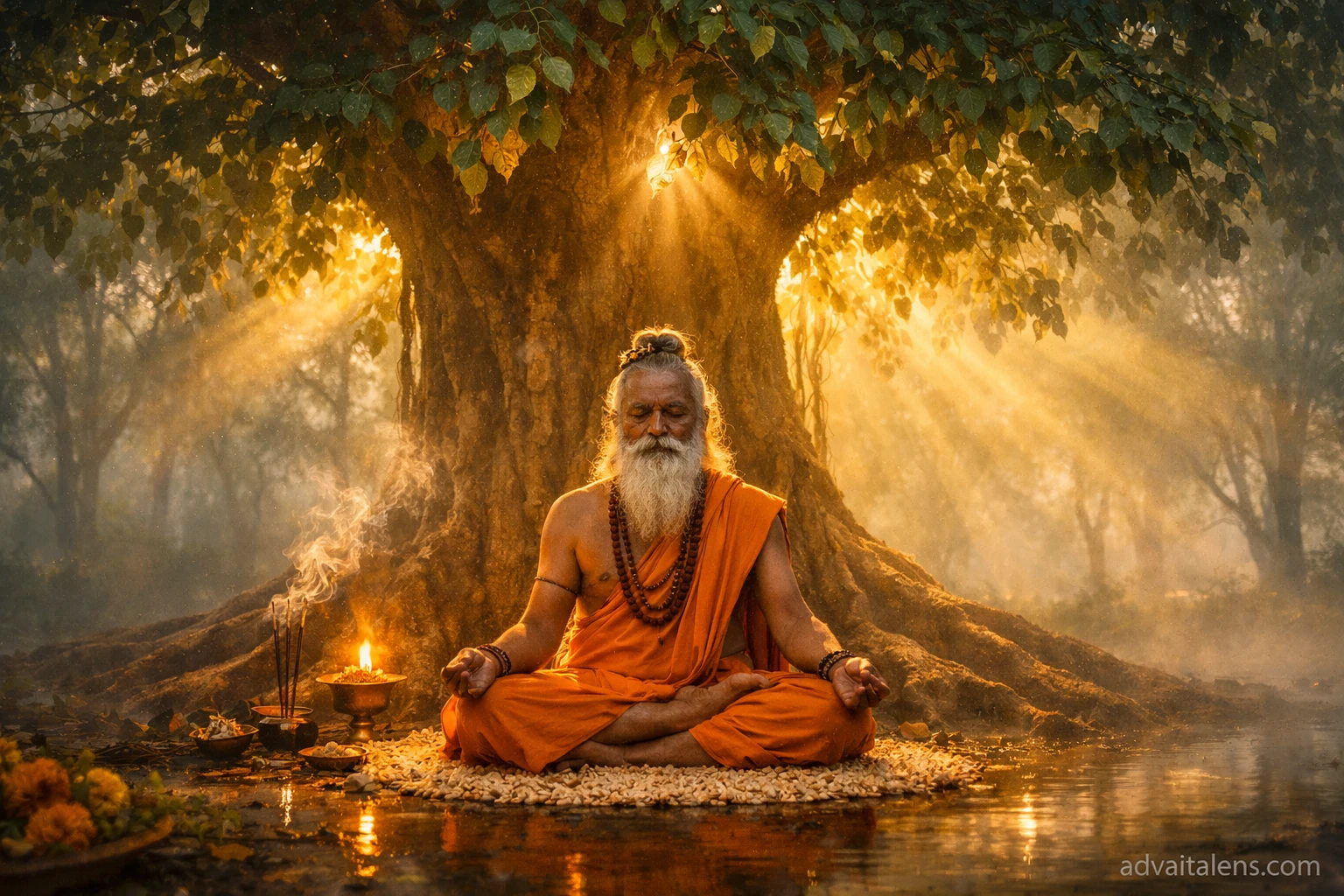
In the sacred journey of a Jiva [individual soul], certain moments in time act as celestial gateways, offering a chance to wash away the accumulated weight of past karmas. Among these, Apara Ekadashi stands as a beacon of hope. Falling on the Ekadashi [11th day] of the Krishna Paksha [waning phase of the moon] in the month of Jyeshtha (according to the Amavasyant calendar) or Vaisakha (according to the Purnimant calendar), this day is dedicated to the worship of Lord Trivikrama, a form of Lord Vishnu.
The term Apara translates to “limitless” or “unfathomable.” True to its name, this Vrata [vow/observance] is said to bestow benefits that are boundless in nature, helping the devotee transcend the boundaries of worldly suffering and move toward Moksha [liberation]. As the summer heat intensifies, this spiritual discipline provides a cooling balm for the soul, urging the seeker to look inward and rectify the errors of the past through sincere devotion and Tapas [austerity].
The Scriptural Context
The profound significance of Apara Ekadashi is meticulously recorded in the Brahmanda Purana. The dialogue unfolds as a sacred discourse between Maharaja Yudhishthira, the eldest of the Pandavas, and Lord Krishna, the Supreme Personality of Godhead.
Seeking a way to uplift humanity from the depths of the Kali Yuga [the current age of spiritual decline], Yudhishthira Maharaj humbly enquired: “O Janardana! What is the name of the Ekadashi that occurs during the dark fortnight of the month of Jyeshtha, and what are its specific glories? Please describe this to me in detail.”
Lord Krishna, with a smile of divine compassion, replied that the merits of this Ekadashi are so vast that even a brief mention of them can purify the listener. He then proceeded to narrate the ancient Katha [sacred story] associated with this day.
The Sacred Vrat Katha: The Liberation of King Mahadhvaja
In ancient times, there lived a king named Mahadhvaja, a ruler known for his piety and kindness toward his subjects. However, his younger brother, Vajradhvaja, was the polar opposite—a man consumed by envy, malice, and a deep-seated hatred for his elder brother’s righteousness.
Driven by his dark impulses, Vajradhvaja conspired to commit a heinous crime. One night, he crept into the palace, murdered his brother Mahadhvaja, and secretly buried the body beneath a large Peepal [sacred fig] tree in a remote forest. Because the King had died an untimely, violent death and was denied the essential Antyeshti [last rites], his soul was unable to move forward to the higher realms. Instead, he became a Preta [a restless spirit/ghost], haunting the Peepal tree and causing distress to those who passed by.
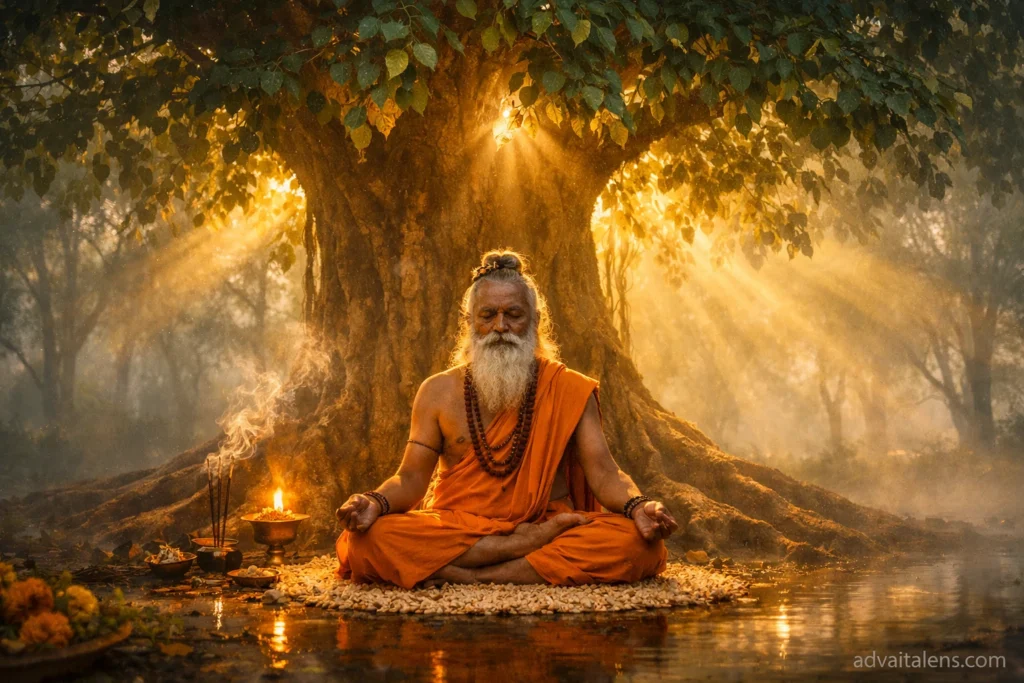
One day, a great sage named Dhaumya Rishi happened to pass by that forest. Through his Divya-Drishti [divine vision], the sage immediately perceived the suffering spirit trapped in the tree. He realized that this was the soul of the virtuous King Mahadhvaja. Moved by deep compassion, the sage addressed the spirit and learned of the tragedy that had occurred.
“O King! Your current state is the result of a great injustice and the lack of proper rites. But do not despair. I shall perform a penance on your behalf and grant you the merit required to break these shackles of ghostly existence.”
Dhaumya Rishi then observed the Apara Ekadashi Vrata with full devotion. On the following day, he solemnly offered the entire fruit of his fast and prayers to the spirit of Mahadhvaja.
By the sheer power of this transferred merit, the King was instantly purged of his lower form. A celestial chariot descended from the heavens, and Mahadhvaja, now radiating divine light, thanked the sage and ascended to the spiritual world, Vaikuntha.
Spiritual Benefits & Mahatmya
The Mahatmya [greatness] of Apara Ekadashi is such that it is specifically recommended for those who have committed grave sins that weigh heavily on the conscience.
- Neutralizing Grave Sins: This Vrata is said to grant forgiveness for sins such as Brahma-hatya [killing a Brahmin], bearing false witness, giving false testimony, or deceiving others.
- Comparison of Merit: Lord Krishna explains that the merit of this fast is equal to:
- Bathing in the sacred waters of Pushkara during the month of Kartika.
- Giving thousands of cows in Dana [charity].
- Observing the Makara Sankranti at Prayag.
- Performing the Ashvamedha Yajna [horse sacrifice].
- Worldly Success: Beyond spiritual liberation, the observer is blessed with fame, wealth, and the strength to overcome worldly obstacles.
Rituals and Vidhi
To reap the full benefits of Apara Ekadashi, the devotee must follow the Vidhi [prescribed method] with a pure heart and unwavering focus.
Preparation (Dashami)
The discipline begins on the day of Dashami [the 10th day]. One should consume only a single, simple meal (avoiding grains if possible) and refrain from any indulgence. This prepares the body and mind for the intense spiritual focus of the following day.
Sankalpa and Puja
- Brahmamuhurta: Rise during the Brahmamuhurta [the period 1.5 hours before sunrise], a time when the atmosphere is charged with Sattva [purity].
- Sankalpa: After a ritual bath, stand before an image of Lord Vishnu and take a Sankalpa [solemn vow] to fast and remain truthful throughout the day.
- The Offering: Perform Puja [worship] using Tulsi leaves, incense, sandalwood paste, and fresh flowers. Offering yellow clothes or flowers to the Lord is considered very auspicious.
Spiritual Practices
- Chanting: Recite the Vishnu Sahasranama [the thousand names of Vishnu] or the Hare Krishna Mahamantra.
- Jagaran: It is highly recommended to stay awake during the night, engaging in Bhajan [devotional songs] and reading the Puranas. This Jagaran [night vigil] signifies the soul’s wakefulness in the night of worldly ignorance.
Parana
The fast is broken on Dvadashi [the 12th day] during the specific Parana [fast-breaking] window.
- Offer food and Dana [charity] to Brahmins or the needy before taking your own meal.
- The first food taken should be simple and sanctified as Prasada [divine grace].
Conclusion
The observance of Apara Ekadashi is a reminder that no matter how deep the shadows of our past mistakes, the light of divine grace is always available to those who seek it with sincerity. By practicing restraint and devotion on this day, we do not merely starve the body; we nourish the Atma [soul]. In a world that often rewards falsehood and greed, this Vrata anchors us in Dharma [righteousness] and Truth.
May the grace of Lord Trivikrama descend upon you, clearing your path of all obstacles and filling your life with limitless peace and devotion.
Notes for the Seeker
Chintan [Contemplation]
Reflect on the story of King Mahadhvaja: Is there a “secret burden” or a past mistake you are carrying that makes you feel like a “Preta”—stuck and unable to move forward in your spiritual life? What would it feel like to release that weight through the power of a fresh Sankalpa?
Sadhana [Practice]
In honor of the truth-bestowing nature of this Ekadashi, practice Satya [truthfulness] in speech today. Additionally, dedicate at least 15 minutes to Mauna [silence] to listen to the inner witness.
My Sankalpa [Resolve]
On this Apara Ekadashi, I, _______________________, resolve to ___________________________________________________________.
